 By profyler
 Albert Einstein is celebrated as one of the most influential scientists in history, whose groundbreaking theories reshaped our understanding of the universe. His work in physics not only redefined the fabric of space and time but also laid the foundation for modern technology and scientific inquiry. His life and legacy are a testament to relentless curiosity, intellectual rigor, and an unyielding commitment to truth. This article provides an in-depth exploration of Einstein’s journey, his major scientific contributions, and his enduring influence on both science and society.
Early Life and Education

Albert Einstein was born in Ulm, Germany, where his early years were marked by curiosity and a deep fascination with the mysteries of nature. From a young age, he exhibited a unique ability to think abstractly and solve problems that many of his peers could not comprehend. Despite challenges in conventional schooling, his inquisitive mind led him to explore advanced concepts on his own.
Einstein’s education was not confined to the classroom. He absorbed knowledge from a variety of sources, reading widely and engaging in independent study. His exposure to the works of great scientists and philosophers ignited a passion for understanding the underlying principles that governed the natural world. This early period of self-guided learning laid the groundwork for his later achievements in theoretical physics.
The Formative Years in Scientific Thought
During his formative years, Einstein’s mind was deeply engaged with the principles of mathematics and physics. He spent countless hours grappling with complex problems, developing theories that would later revolutionize the scientific community. His time as a student was characterized by a combination of rigorous study and profound reflection, enabling him to question established doctrines and propose innovative solutions.
Einstein’s early work was distinguished by a willingness to challenge traditional scientific beliefs. He recognized that the world around him was governed by principles that were not immediately apparent, and he dedicated himself to uncovering these hidden truths. This commitment to deep exploration and critical thinking set the stage for his future breakthroughs.
Scientific Breakthroughs and Theories
Special Relativity: Redefining Space and Time
Einstein’s publication of the Special Theory of Relativity in 1905 marked a turning point in the field of physics. In this revolutionary paper, he introduced the idea that the laws of physics are the same for all non-accelerating observers and that the speed of light in a vacuum is constant, regardless of the motion of the light source. This theory fundamentally altered the classical understanding of space and time.
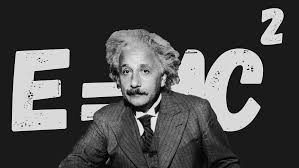
The equation E = mc², derived from the principles of special relativity, became one of the most famous equations in the world. It established a profound relationship between mass and energy, suggesting that they are interchangeable. This insight not only redefined fundamental concepts in physics but also had practical implications that would later be seen in both nuclear energy and astrophysics.
General Relativity: The Fabric of the Cosmos
Building on his earlier work, Einstein developed the General Theory of Relativity. This theory provided a new framework for understanding gravity, not as a force acting at a distance, but as a curvature of space and time caused by mass and energy. General relativity replaced Newton’s classical mechanics and opened up new avenues for exploring cosmic phenomena.
General relativity has been confirmed by numerous experiments and observations, from the bending of light around massive objects to the expansion of the universe. Einstein’s insights into gravity have been instrumental in the study of black holes, gravitational waves, and cosmology. His theory continues to be a cornerstone of modern astrophysics and has paved the way for cutting-edge research in space exploration.
Quantum Mechanics and the Photoelectric Effect
In addition to his work on relativity, Einstein made significant contributions to the field of quantum mechanics. His explanation of the photoelectric effect provided key evidence for the quantum nature of light, supporting the idea that light is composed of discrete packets of energy known as photons. This work earned him the Nobel Prize in Physics in 1921 and laid the foundation for the development of quantum theory.
Einstein’s involvement in quantum mechanics was marked by a deep philosophical inquiry into the nature of reality. Although he had reservations about some interpretations of quantum mechanics, his pioneering contributions significantly advanced the field. His work remains a critical reference point for contemporary scientists exploring the quantum realm.
Impact on Modern Physics and Technology
Revolutionizing Scientific Inquiry
Albert Einstein’s theories have had a profound and lasting impact on the scientific community. His work introduced concepts that challenged and expanded the boundaries of human knowledge. The implications of his theories have reached far beyond the realm of academic physics, influencing technology, engineering, and even our understanding of the universe itself.
The principles of relativity and quantum mechanics have spurred a myriad of technological advancements. Satellite navigation systems, for example, rely on the precise calculations that stem from Einstein’s theories. The accurate measurement of time and space, crucial for the functioning of the Global Positioning System (GPS), is directly linked to the corrections provided by relativity.
Advancements in Astrophysics and Cosmology
The application of Einstein’s theories in astrophysics has enabled scientists to explore the cosmos in unprecedented detail. Observations of distant galaxies, the detection of gravitational waves, and the study of cosmic phenomena such as black holes all trace their roots to his groundbreaking ideas. His work has transformed the way astronomers perceive the universe, from the large-scale structure of galaxies to the intricate dance of celestial bodies.
Einstein’s influence extends to the development of theoretical models that describe the behavior of the universe. Researchers continue to build on his work to explain the mysteries of dark matter, dark energy, and the origin of the cosmos. His legacy is a vibrant and dynamic field of study that continues to evolve as new discoveries are made.
Philosophical and Intellectual Contributions
A Visionary Approach to Science and Society
Beyond his scientific achievements, Albert Einstein is remembered for his philosophical insights and his thoughtful approach to the ethical implications of scientific progress. He was deeply concerned with the societal impact of scientific discoveries and advocated for the responsible use of technology. Einstein believed that scientific advancement should be accompanied by moral responsibility and a commitment to human welfare.
His writings on the nature of reality, the role of imagination, and the limits of human understanding have inspired generations of thinkers. Einstein’s reflections on the interconnectedness of all things, the beauty of the natural world, and the importance of intellectual freedom continue to resonate with scholars and laypersons alike.
A Legacy of Humanism and Advocacy
Einstein was not only a brilliant scientist but also a passionate advocate for peace and social justice. His outspoken views on nuclear disarmament and global cooperation in the aftermath of World War II earned him a reputation as a humanitarian. He emphasized that scientific progress should serve the betterment of humanity, urging political leaders and the global community to work together in pursuit of a more peaceful world.
Throughout his life, Einstein maintained that the pursuit of knowledge must be balanced with a commitment to ethical values. His advocacy for civil rights, educational reform, and international understanding continues to inspire movements aimed at fostering a more equitable and compassionate society.
Einstein’s Enduring Influence on Education and Research
Inspiring Future Generations
Albert Einstein’s contributions to science have become an integral part of educational curricula around the world. His theories are studied not only for their scientific significance but also for the critical thinking and problem-solving skills they inspire. Educators use Einstein’s work to encourage students to question established norms and to pursue knowledge with intellectual curiosity and rigor.
Einstein’s life story is a powerful reminder that perseverance, creativity, and a willingness to challenge conventional wisdom can lead to groundbreaking discoveries. His example continues to motivate students and researchers to strive for excellence and to explore the frontiers of human knowledge.
Continued Research and Innovation
The scientific community remains deeply engaged with Einstein’s legacy. His theories continue to be tested, refined, and applied in new contexts, driving innovation across multiple fields. From advancements in space exploration to the development of quantum technologies, the influence of his work is evident in the ongoing progress of modern science.
Researchers today build on Einstein’s theories to push the boundaries of what is known about the universe. The quest to understand the intricate details of space-time, the nature of gravity, and the behavior of subatomic particles is a direct continuation of the intellectual journey that Einstein began. His work remains a vibrant source of inspiration and a guiding light for those dedicated to exploring the unknown.
Political and Social Contributions
Advocacy for Peace and Global Cooperation
Albert Einstein’s commitment to peace and global unity was as integral to his identity as his scientific pursuits. He was a vocal critic of militarism and a staunch advocate for nuclear disarmament. Einstein understood that the profound power of scientific discovery must be harnessed with caution, ensuring that technological advancements benefit humanity rather than lead to its detriment.
Throughout his life, Einstein used his platform to speak out against the dangers of war and to promote dialogue and cooperation among nations. His efforts to foster international understanding and his warnings about the potential misuse of scientific innovations have left an indelible mark on global political discourse.
Influence on Civil Rights and Social Justice
In addition to his advocacy for peace, Einstein was a strong supporter of civil rights and social justice. He believed in the importance of equality and the need to dismantle systems of oppression. His public statements and personal actions reflected a deep commitment to the principles of fairness and human dignity.
Einstein’s engagement with civil rights issues extended beyond the realm of scientific inquiry. He was known for his willingness to challenge societal norms and to stand up for the marginalized and oppressed. His legacy in this area is a testament to his belief that the pursuit of knowledge must be accompanied by a commitment to ethical principles and social responsibility.
Later Years and the Legacy of a Genius
The Final Chapters of an Extraordinary Life
In his later years, Albert Einstein continued to explore the frontiers of science while also dedicating time to humanitarian and political causes. His move to the United States marked a new chapter in his life, as he became involved in academic and research institutions that provided him with the freedom to pursue his intellectual interests without constraint.
During this period, Einstein remained an active contributor to scientific discourse. He engaged in public debates, corresponded with fellow intellectuals, and continued to refine his theories. His later work, although less celebrated than his earlier breakthroughs, provided important insights into the nature of the universe and further solidified his reputation as a visionary thinker.
The Enduring Impact on Future Generations
The legacy of Albert Einstein extends far beyond his scientific achievements. His life and work have become emblematic of the spirit of inquiry and the transformative power of human creativity. Today, his contributions continue to influence research, education, and public policy, serving as a source of inspiration for countless individuals around the globe.
The principles that Einstein championed—curiosity, intellectual integrity, and a commitment to ethical progress—remain as relevant today as they were during his lifetime. His legacy is enshrined in the institutions of higher learning, the laboratories of modern science, and the ongoing global dialogue about the role of technology in society.
The Future of Einstein’s Ideas
Emerging Technologies and Scientific Frontiers
As modern science delves into the complexities of quantum computing, gravitational waves, and cosmology, the relevance of Einstein’s theories is ever more apparent. His pioneering work laid the groundwork for technologies that are now on the cusp of transforming our world. Researchers continue to explore the implications of relativity and quantum mechanics, leading to innovations that promise to reshape industries and redefine the boundaries of human knowledge.
In the fields of astrophysics and cosmology, Einstein’s ideas serve as a guiding framework for understanding phenomena that were once thought to be beyond the realm of human comprehension. The search for a unified theory that reconciles general relativity with quantum mechanics is a direct outgrowth of his intellectual legacy, representing the next frontier in scientific discovery.
A Model for Interdisciplinary Inquiry
Einstein’s approach to scientific inquiry was characterized by an interdisciplinary mindset that bridged the gap between theoretical physics, philosophy, and the humanities. His work exemplifies how rigorous scientific investigation can coexist with profound ethical and philosophical reflections. This model of interdisciplinary inquiry continues to inspire modern researchers who seek to address the complex challenges of the contemporary world.
The integration of diverse fields of study is essential in tackling issues such as climate change, renewable energy, and global health. Einstein’s legacy reinforces the idea that innovation is most powerful when it is informed by a broad spectrum of perspectives and disciplines. His life remains a beacon for those who strive to combine scientific excellence with social and ethical responsibility.
Conclusion
Albert Einstein’s legacy is a powerful narrative of intellectual triumph and humanistic vision. His revolutionary contributions to the fields of relativity and quantum mechanics not only redefined our understanding of the universe but also paved the way for modern scientific and technological advancements. His philosophical insights and advocacy for global peace and social justice have left an enduring imprint on society, inspiring future generations to pursue knowledge with both passion and purpose.
Einstein’s life exemplifies the transformative potential of curiosity and creativity. His relentless pursuit of truth, coupled with his commitment to ethical principles, has made him a timeless symbol of the human spirit’s capacity to overcome obstacles and expand the horizons of understanding. As the world continues to grapple with the challenges of the modern era, the ideas and values that Einstein championed remain a vital source of inspiration and guidance.
In every classroom, laboratory, and research facility, the influence of Albert Einstein is palpable. His theories continue to drive innovation, his writings provoke thoughtful debate, and his example of courage and perseverance motivates countless individuals to explore the mysteries of our universe. The revolutionary mind of Einstein endures, offering a legacy that not only informs our scientific endeavors but also enriches our collective journey toward a more enlightened and harmonious world.