
 By profyler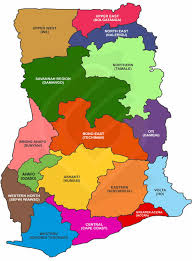
Ghana, a vibrant and diverse nation in West Africa, is administratively divided into 16 regions. These regions represent the highest level of local government and serve as the cornerstone of the country’s decentralization and development strategy. Each region is not only a geographical and administrative unit but also a repository of cultural heritage, economic vitality, and regional identity. This profile explores what the 16 regions are, their symbols and authority, how they are used in governance, and other important aspects that define their role in Ghana’s national landscape.
Historical Evolution of Ghana’s Regional Divisions
Historically, Ghana’s administrative boundaries have evolved through periods of colonial rule, post-independence restructuring, and recent decentralization reforms. Originally divided during the colonial era, the country’s regions were reconfigured after independence to promote efficient governance and equitable development. In 2018, Ghana underwent a significant reorganization when new regions were created, increasing the total from 10 to 16. This move was intended to bring government services closer to the people, boost regional development, and celebrate the nation’s rich cultural diversity.
Overview of the 16 Regions
Ghana’s 16 regions are:
- Greater Accra Region
- Overview: Home to the nation’s capital, Accra, this region is the political, economic, and administrative hub of Ghana.
- Significance: It drives urban development, international trade, and modern cultural trends.
- Ashanti Region
- Overview: Known as the cultural heartland of the Ashanti people, it is famed for its rich history, art, and traditional crafts.
- Significance: The region is a center for commerce and traditional governance, anchored by Kumasi, the historic capital of the Ashanti Empire.
- Western Region
- Overview: Rich in natural resources, including oil and minerals, and blessed with coastal beauty and forest reserves.
- Significance: It plays a key role in Ghana’s mining and industrial sectors.
- Eastern Region
- Overview: Known for its lush landscapes, waterfalls, and historical sites, it also boasts significant industrial activities.
- Significance: It is an important tourism and manufacturing hub.
- Northern Region
- Overview: Characterized by expansive savannahs and a strong tradition of agriculture, it is one of the largest regions by area.
- Significance: This region is vital for agriculture, livestock rearing, and rural development.
- Upper East Region
- Overview: Rich in culture and tradition, with unique archaeological sites and a strong heritage of local crafts.
- Significance: It is pivotal for cultural tourism and agricultural production in the northern belt.
- Upper West Region
- Overview: Known for its serene landscapes, traditional festivals, and ancient historical sites.
- Significance: The region emphasizes sustainable agriculture and community-based tourism.
- Volta Region
- Overview: Nestled along the shores of Lake Volta and bordered by the Togo hills, it is known for its vibrant festivals and scenic beauty.
- Significance: It supports tourism, agriculture, and the hydropower industry.
- Central Region
- Overview: Home to historical forts and castles that narrate Ghana’s colonial past, as well as stunning beaches and cultural sites.
- Significance: It is a major destination for cultural tourism and education.
- Bono Region
- Overview: Rich in agricultural produce and known for its vibrant traditions and festivals.
- Significance: It is key to food production and regional commerce.
- Bono East Region
- Overview: Emerging as an economic and cultural center, it blends agriculture with growing industrial activities.
- Significance: It contributes to regional development through improved infrastructure and trade.
- Ahafo Region
- Overview: Characterized by its forested areas and mineral resources, it is an emerging hub for sustainable development.
- Significance: The region focuses on agro-processing and eco-friendly practices.
- Oti Region
- Overview: Located in the northeastern part of the country, it is noted for its rich cultural diversity and natural attractions.
- Significance: It plays an important role in tourism, agriculture, and local craftsmanship.
- Savannah Region
- Overview: Marked by vast savannah landscapes and a unique cultural heritage, it is one of the newest regions focused on rural development.
- Significance: The region is pivotal for agricultural innovation and eco-tourism.
- North East Region
- Overview: With a predominantly agrarian society, this region is known for its rugged terrain and vibrant cultural festivals.
- Significance: It is essential for addressing regional disparities and promoting sustainable livelihoods.
- Western North Region
- Overview: Rich in natural beauty and mineral resources, it combines coastal attractions with inland agricultural zones.
- Significance: The region is crucial for mining, agriculture, and coastal tourism.
Administrative Authority and Governance
Structure and Functions
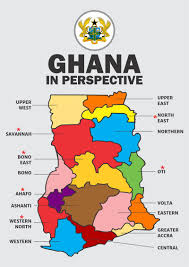
The 16 regions of Ghana function as autonomous administrative units, each governed by a Regional Coordinating Council. These councils are tasked with coordinating the activities of the district assemblies within the regions, ensuring the effective delivery of government services, and implementing national policies at the regional level. Each region is headed by a Regional Minister, who is appointed by the President and acts as the chief executive officer for the region.
Regional Symbols and Identity
While each region has its own unique identity, many share common symbols that represent Ghana’s national heritage. Regional flags, emblems, and sometimes mottos are used during official functions and public events. These symbols often incorporate elements of the national coat of arms—such as the black star and Adinkra symbols—combined with regional motifs that reflect local culture, history, and natural beauty. For instance, a region with rich forest reserves might feature images of trees or wildlife, while coastal regions may incorporate waves or maritime elements into their symbols.
Role in Decentralization and Local Development
The establishment of the 16 regions was a strategic move to enhance decentralization in Ghana. By bringing government closer to the people, regional administrations are better positioned to address local challenges, allocate resources efficiently, and foster community development. This decentralized structure enables tailored solutions that reflect the unique economic, social, and cultural needs of each region. The regions serve as critical nodes in national planning, influencing decisions on infrastructure, education, healthcare, and economic policies.
Symbols and Their Usage
Cultural Emblems and Regional Flags
Each region in Ghana has developed its own set of symbols that serve to communicate its heritage and identity. These symbols—often seen on regional flags, official documents, and during public ceremonies—are designed to instill pride among residents and to communicate the region’s values and aspirations to the broader nation and the world.
- Regional Flags: These flags typically incorporate national colors (red, gold, green) along with unique design elements that reflect local culture. They are displayed at regional offices, public events, and during official visits.
- Emblems and Coats of Arms: Many regions use emblems or coats of arms that combine elements of the national emblem with features specific to the region, such as local flora, fauna, or landmarks.
Authority and Legal Framework
The authority of the 16 regions is established by the Constitution of Ghana and further delineated through local government laws and regulations. This legal framework provides the regions with the mandate to manage local affairs, oversee development projects, and ensure the implementation of national policies. The Regional Coordinating Councils and the Regional Ministers work within this framework to maintain order, promote transparency, and ensure accountability in governance.
Economic, Social, and Cultural Significance
Economic Diversity
The 16 regions are characterized by diverse economic activities that range from industrial and commercial hubs in urban regions like Greater Accra and Ashanti to agriculture, mining, and eco-tourism in regions such as Northern, Upper East, and Western North. This diversity allows Ghana to leverage its natural resources and human capital to drive national growth and reduce regional disparities.
Social and Cultural Richness
Each region is a repository of unique cultural traditions, languages, and histories. From the bustling markets of Accra to the vibrant festivals of the Northern and Volta regions, the cultural mosaic of Ghana is reflected in its regional diversity. Local customs, music, dance, and art are celebrated and preserved through regional festivals, cultural institutions, and community initiatives. The regions also serve as educational hubs where traditional knowledge and modern practices converge, fostering a dynamic environment of cultural exchange.
Tourism and Regional Identity
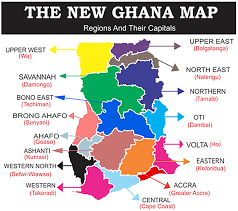
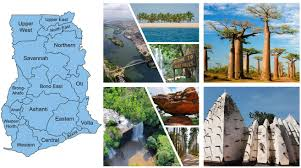
Tourism plays a significant role in many regions, where natural attractions, historical sites, and cultural festivals draw visitors from around the world. Regions like Central, Volta, and Western are renowned for their picturesque landscapes, historical landmarks, and vibrant local traditions. These attractions not only boost local economies but also contribute to a shared national identity that celebrates Ghana’s rich and varied heritage.
Conclusion
The 16 regions of Ghana form the backbone of the nation’s administrative and cultural landscape. Each region, with its own unique identity, symbols, and economic strengths, plays a vital role in the governance and development of the country. Governed by regional councils and led by appointed Regional Ministers, these administrative units ensure that government services are delivered efficiently and that local development priorities are addressed in a manner that reflects the specific needs of each area.
The symbols of the regions—ranging from flags and emblems to local cultural motifs—serve as powerful reminders of the nation’s heritage and the diversity that makes Ghana unique. Through a combination of centralized planning and decentralized execution, the 16 regions contribute to a dynamic, inclusive, and forward-thinking national framework.
As Ghana continues to evolve, the 16 regions will remain crucial in shaping the future of the country, fostering economic growth, preserving cultural heritage, and promoting social cohesion. They embody the spirit of unity in diversity—a testament to Ghana’s commitment to democratic governance, sustainable development, and the celebration of its rich cultural tapestry.